Within Australia’s migration system, there is a highly important but often misunderstood concept known as Migration Program Planning Levels.In simple terms, this refers to the annual cap and structure of permanent visas set by the Federal Government. This number directly affects:whether you are invited,how long applications are processed,and how competitive each migration pathway becomes.
I. The 2025–26 Planning Level Remains Unchanged
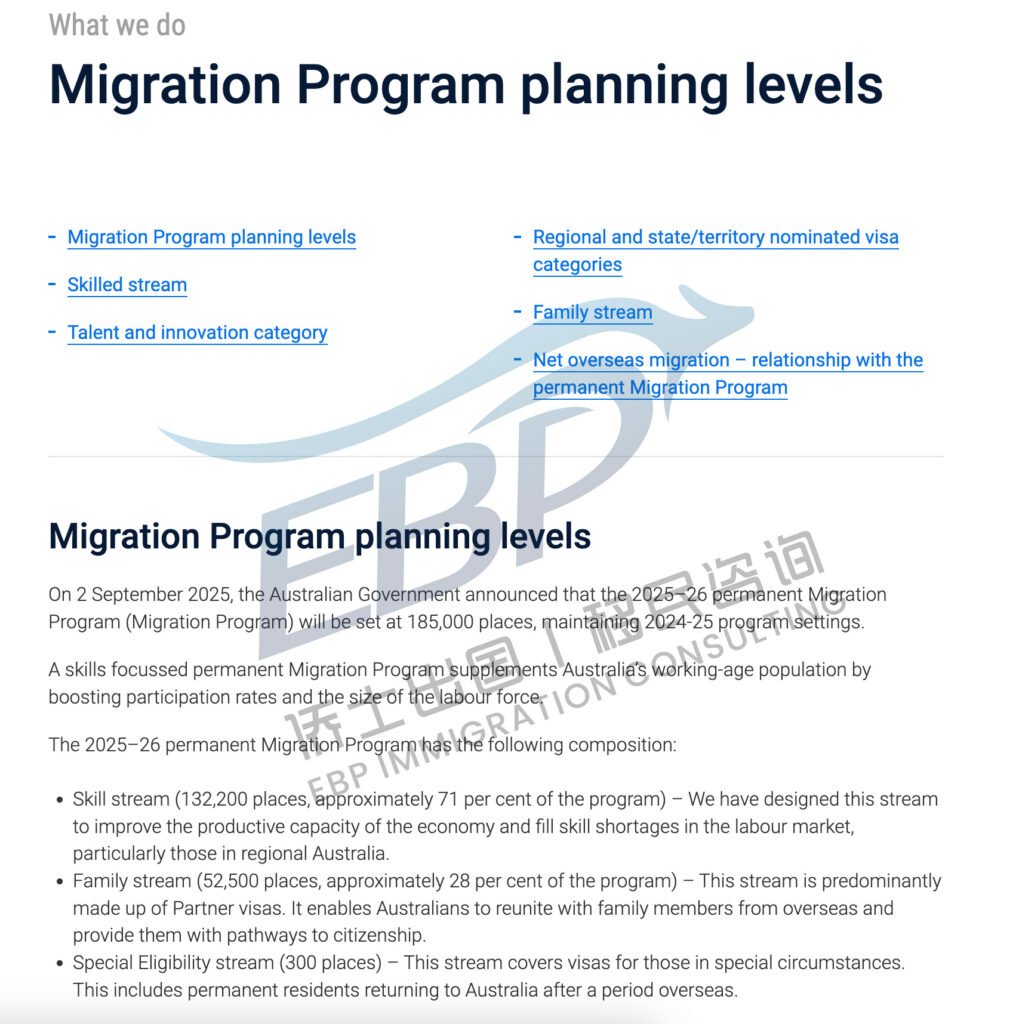
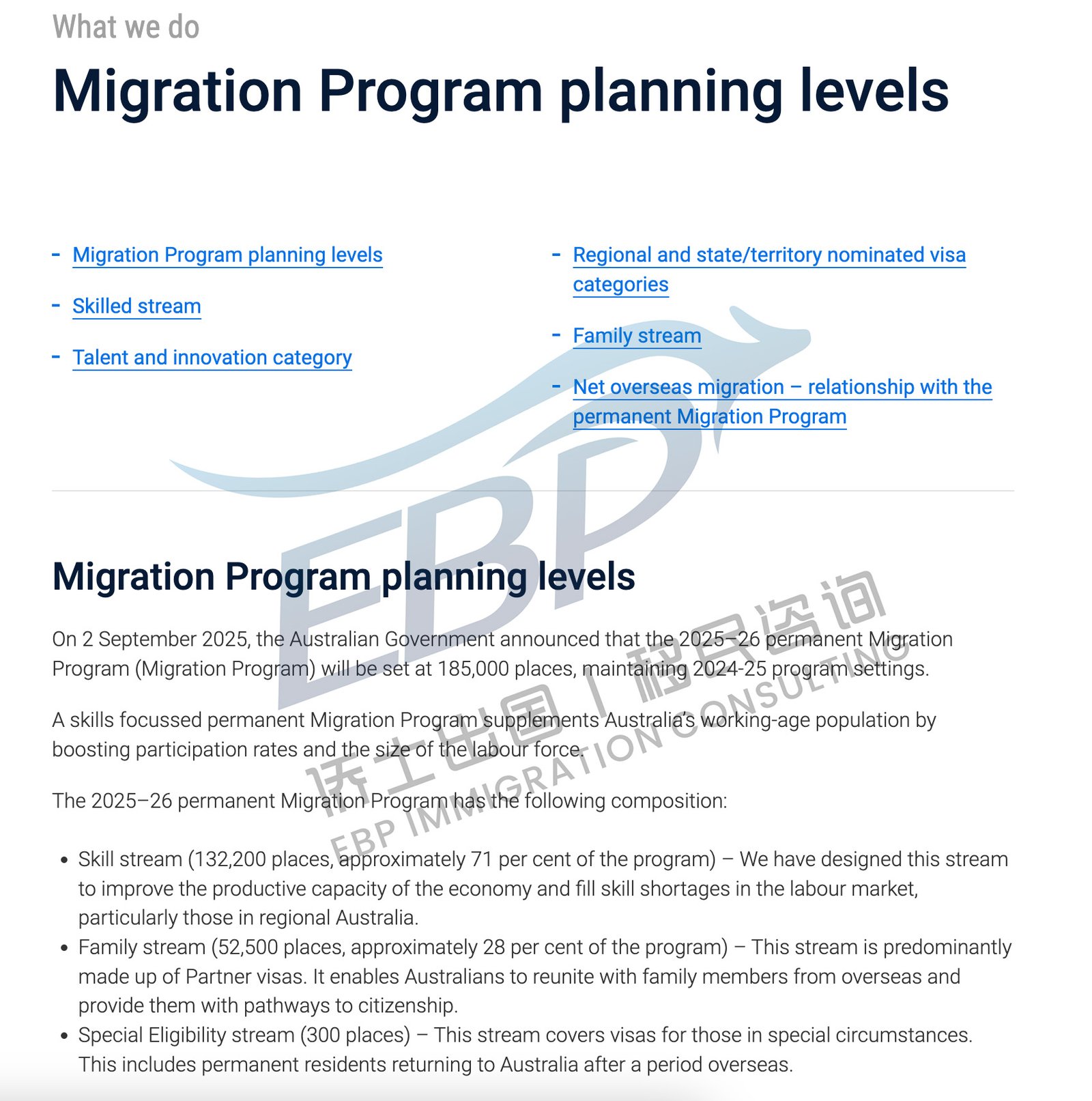
For the 2025–26 financial year, the Australian Government has officially announced that the Permanent Migration Program will remain at:185,000 permanent visa places (the same level as the previous financial year)
This indicates that:
- there is no overall tightening of migration policy,
- skilled migration remains the core focus, and
- stable planning levels provide greater predictability.
- For applicants under skilled migration, employer sponsorship, and state nomination, this is generally positive news.
II. How Is the Quota Structured?
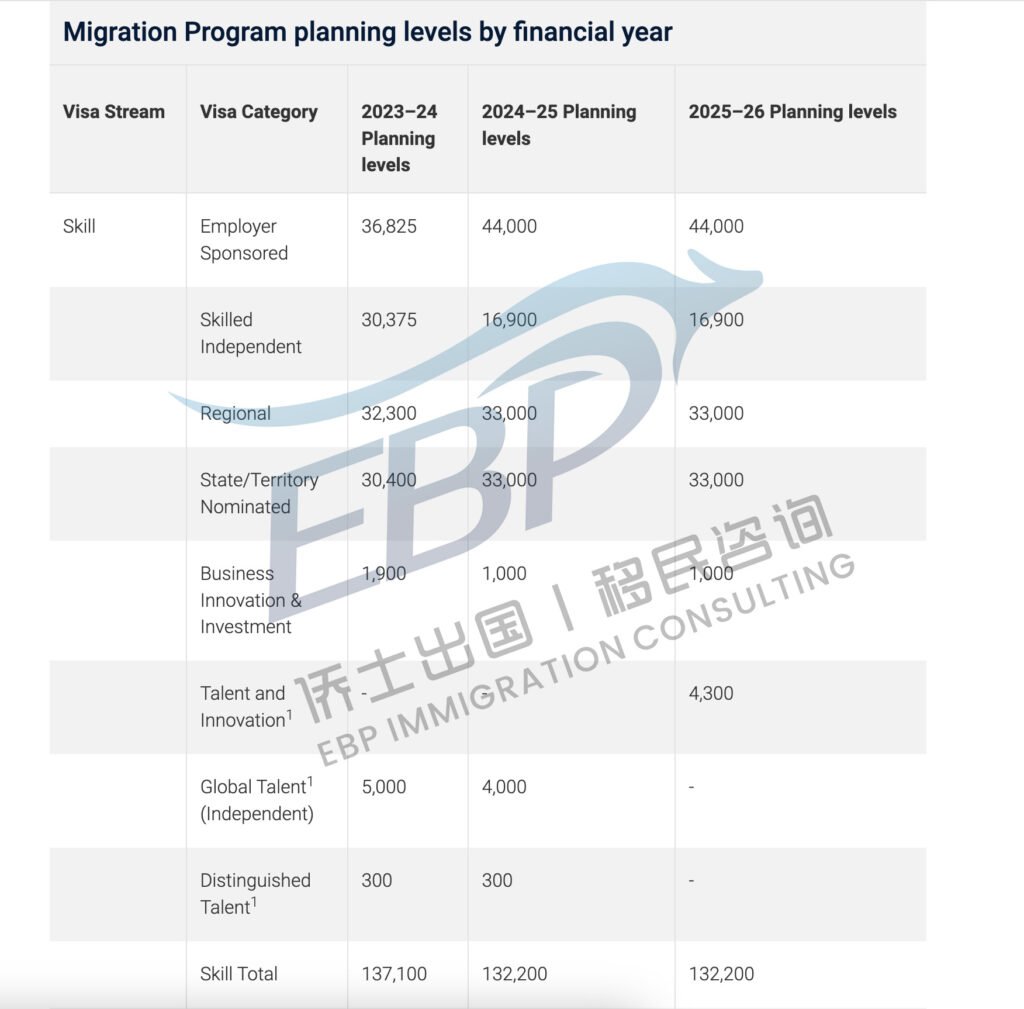
While the Department has not yet released the final detailed breakdown on its website, based on authoritative policy analysis and long-standing allocation patterns, the structure is expected to be broadly as follows:
1. Skill Stream
- programApproximately 28% of the total program 71%
- Focused on addressing labour shortages and skills gaps
- Includes employer-sponsored visas, independent skilled migration, and regional pathways,Skilled migration continues to be the primary and most stable pillar of the program.
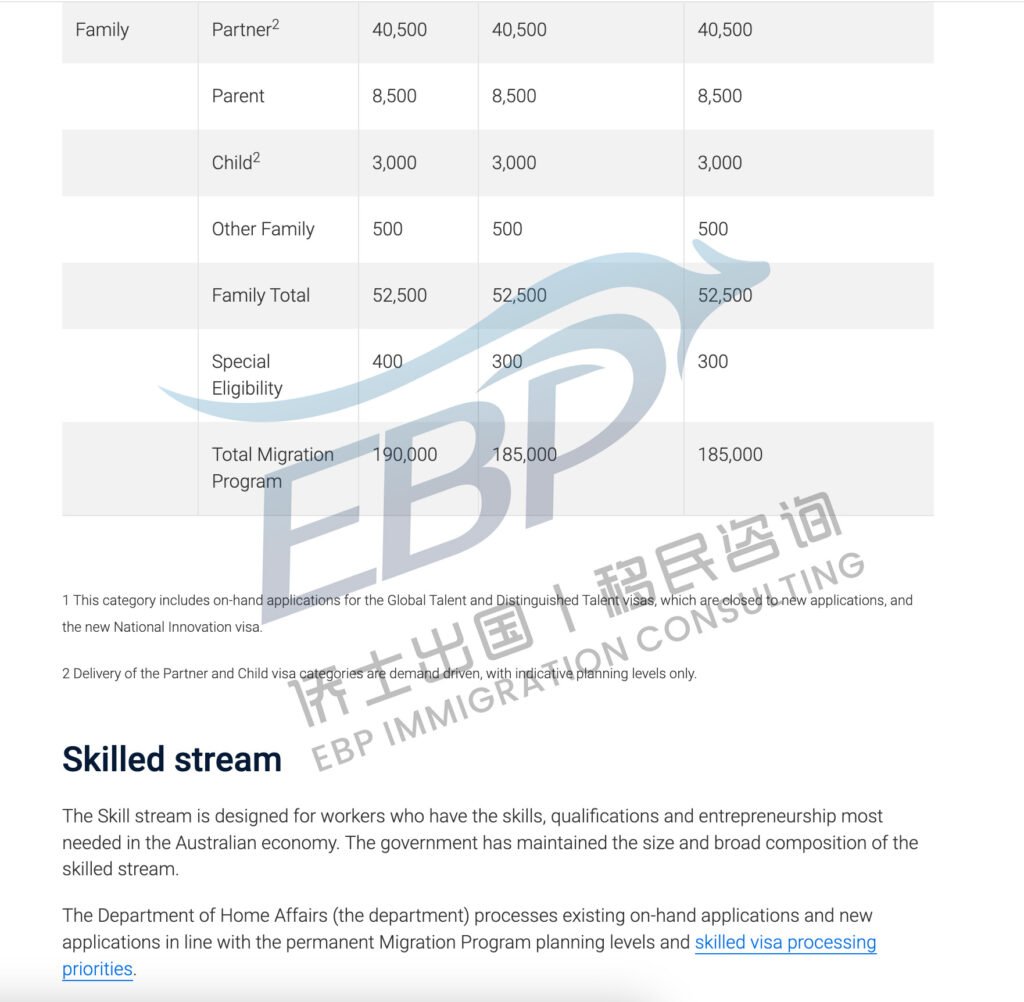
2. Family Stream
- Includes partner, spouse, child, and other family visas
- programApproximately 28% of the total program 28%
- Primarily supports family reunion and long-term settlement needs,Family migration remains a significant and stable component of the overall quota.
3. Special Eligibility,A very small number of places,Reserved for exceptional or policy-driven cases
III. Why Are Planning Levels So Important?
Migration Program Planning Levels function as an official capacity framework. They directly influence:the size of invitation rounds,the number of visas granted under skilled, state-nominated, and employer-sponsored streams,queue lengths and processing speed,visa prioritisation settings,and even trends in invitation score thresholds.In other words, Planning Levels are not just numbers — they reflect the Federal Government’s policy judgement on population growth and labour market needs.
If planning levels increase → migration becomes more flexible,If planning levels decrease → competition intensifies
For 2025–26, the key message is:Stability, skilled migration priority, and balanced family reunion,This is a relatively favourable signal for skilled migration applicants.
IV. What Does This Mean in Practice?
1.1. Skilled Migration Remains the Core Focus
As the largest component of the program, skilled migration will continue to:
prioritise skills shortage occupations,
support long-term workforce needs,
operate closely alongside state nomination programs.
2. 2. Family Migration Remains Stable
The continued allocation for partner and family visas shows the government is also balancing:
population stability,labour force participation,and social cohesion.
For student visa holders and couples planning to transition to PR together, this is a positive signal.
3. 3. Employers and Businesses Can Plan Ahead
For both individual applicants and employers/HR teams, stable planning levels allow:
earlier preparation,
more predictable recruitment strategies,
advance planning for employer sponsorship and skills assessments.
This is why many policy commentators emphasise:“Stability matters more than sudden change.”For the migration ecosystem as a whole, this is a constructive outcome.
Reference Source:Migration Program Planning Levels — Official Explanation and Policy Background (Immigration and Citizenship Website)